Rehearsing Humanity
Jim's Musings from Paris June 2026

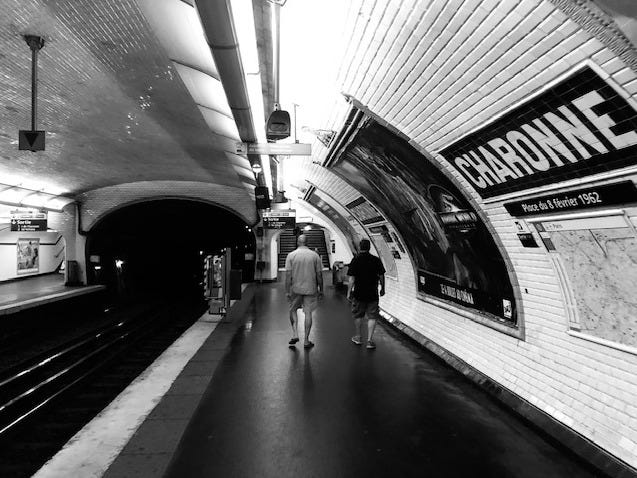
Since coming to Paris, I’ve fallen several times—tripped on an uneven sidewalk or unseen hole in the pavement. I learned very quickly to slow down, take my time, choose my steps more carefully. Navigating the streets of Paris is very different from racing across the University of Akron’s campus, braced against a fierce winter wind, to avoid being late for class. But yesterday a young woman stopped suddenly on the stairs descending into the métro at Bastille. She didn’t just slow down. She didn’t just hesitate to be sure about where she was. She stopped. A dead stop on the busy staircase, just as the crowd behind her, with me in front, right on her heels, was accelerating downward toward the arriving train. I pulled up short. Barely avoiding a collision and swerved to the left. As I brushed past her, I noticed that she was on her phone. Intently engaged in a texting chat. Of course.
From behind me I heard the usual ripple of Parisian exasperation—small sighs (Parisians love to sigh), a muttered “putain”—as our bodies wound around the oblivious mademoiselle in an improvised choreography of annoyance and avoidance. No one touched her. Somehow they never do. But for a brief moment the flow collapsed. The current broke apart.
I found myself more disturbed than irritated.
This kind of thing happens constantly now. People drifting diagonally through crowded sidewalks staring into tiny glowing rectangles. Couples seated silently at cafés, each scrolling through separate worlds. Tourists stopping abruptly in the middle of the street to consult Google Maps. Riders entering the métro before allowing passengers to exit and then sitting with heads down, earbuds sealing individuals inside invisible cocoons of private sound and endless streams of stimulation.
Paris did not move like this fifty years ago.
Of course, there were distracted people then too. Dreamers. Drunks. Lovers. Tourists consulting paper maps with the helpless expression of pilgrims looking for Notre Dame. But even distraction seemed more alive then. More connected to the surrounding world.
A crowded city requires a particular kind of body intelligence. A sensitivity to rhythm, density, tempo, and flow. You learn to anticipate movement. To feel openings before you see them. To adjust unconsciously to the bodies around you. Cities function through these millions of tiny acts of collective negotiation and adaptation.
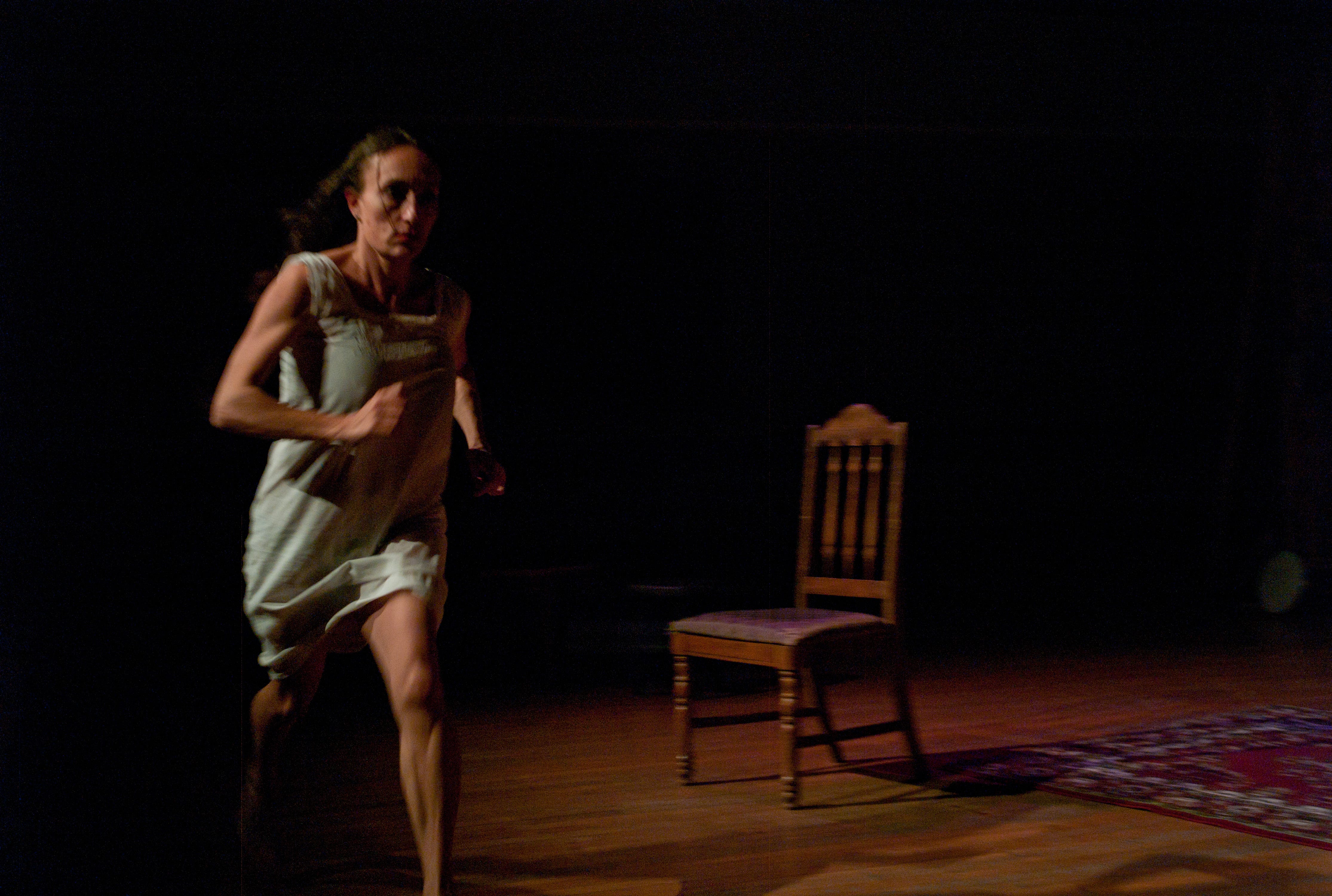
New World Performance Lab’s actor training was deeply connected to this kind of awareness. We practiced attention, listening, rhythm, reaction, contact, impulse. We created exercises involving flow, spatial awareness, collective movement, coordination, responsiveness to changing conditions. “Go for the empty space!” I often shouted while conducting movement classes or work sessions. No forcing. Give the space to the others. Serve your partners.
At the time, I thought I was preparing performers.
But we were really training something else.
We were training how to remain awake inside a field of relationships.
Much of the work in New World Performance Lab was trying to cultivate precisely this kind of consciousness—an ecological consciousness grounded not in ideology but in attention. Eco-theatre, not ego-theatre. We used that phrase often in our 30+ years of searching for ways to resist what has been described as apathy, passivity, and “loss of soul.”
In the early days, we worried that consumerism, nationalism, and late capitalism were eroding our capacity for wakefulness.
We had no idea what was coming.
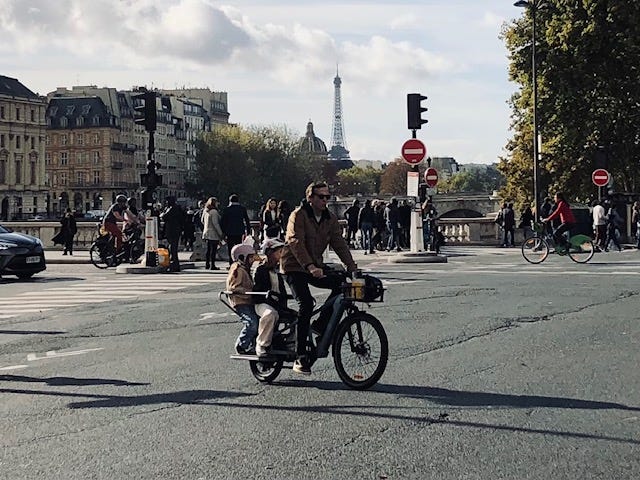
In some of our later NWPL workshops, we increasingly brought urban experience into the work. Performance Ecology was no longer only about forests, rivers, meadows, and open landscapes. The city itself became the field of practice. Since we moved to Paris, I’ve tried to continue that work on myself. Walking meditations, listening to the city’s soundtrack, seeing the detail and the scale of the urban architecture. Becoming at ease and at one with what is happening around me.
I’ve always been drawn to the resonance hidden inside the word atonement: at-one-ment.
On this Pentecost weekend (it’s a holiday again here in France), I’m reflecting on atonement and wondering how to embody that idea. I recall the early exercises in Irvine in Objective Drama when Grotowski would tell me to just go out in the fields behind the Barn and follow the currents. Several times I came face to face with a coyote or rattlesnake.
No earbuds. No phones. No armored distractions. Just looking for the ways to go, letting my body decide, getting out of the way, following the currents.
How can I do that in today’s Paris with everyone in their armor? How can I refind my balance without hardening myself against the city around me? How can I become at-one with the coyotes and rattlesnakes of urban life and not let them frighten me or make me fall?
Perhaps this is why theatre still matters to me.
Not as entertainment. Not even primarily as art. But as one of the few remaining places where human beings gather physically to practice attention together.
As long ago as 1995 at a conference in Toronto called “Why Theatre,” Julia Kristeva spoke about the necessity of preserving “soul space,” an interior space where reflection, ambiguity, memory, grief, tenderness, contradiction, and imagination can still breathe. Without such spaces, we become flattened. Mechanical. Easy to manipulate. André Lepecki describes Kristeva’s intervention:
Kristeva identified the cultural moment we live in as one of the death of the psychic sacred…: “The modern man [sic] does not know how to speak (and perform) his conflicts” and most particularly the conflict of facing the Other. Kristeva called for a “theater of intelligence,” a theater that revolutionizes by means of a return; precisely a return to memory.
And this answers the question Why Theatre? Because this is what theatre has always protected.
A darkened room. Living bodies. Shared breath. Silence. Attention moving back and forth across space. The fragile and mysterious experience of recognizing oneself in another human being.
We will always go to the theatre to remember what it is to be human.
Not perfect. Not efficient. Not optimized.
Human.
New York Times Opinion Columnist Maureen Dowd opened a recent report with:
Humans may be on the way out. But at least the humanities are back.
Or so some of the tech gods tell us.
It seems that, ironically, after decades of dismissing the humanities, the technological world suddenly has realized it cannot engineer:
soul space,
ambiguity,
relational awareness,
memory,
conflict,
recognition,
embodied attention.
Or at least not easily.
And so we return to that most imperfect of the arts: theatre. We must learn to practice performance in all aspects of our lives—whether it’s walking up and down the steps of the métro in Paris, washing the dishes, mopping the floor, writing a newsletter, singing in a chorus, rehearsing a play, or simply learning how to move through the world without hardening ourselves against it.
I can’t get angry at the French girl stopped on the métro steps. Technology can’t be ignored. The glowing rectangle is part of the scenography and choreography of life in the city. The task now is to include the technology without surrendering our awareness, our permeability, our humanity.
Remaining human has always required practice.
Is that what we were doing in those Performance Ecology exercises and movement classes?
Perhaps this is what theatre has always been rehearsing.
For another perspective on some of New World Performance Lab’s training activities, read Wendy Duke’s Substack:

“Soul space”.❤️
Hi Jim, Writig this from our apartment in Paris as we get ready to leave tomorrow. Because I broke my hip on March 8 this has been a visit of rebuilding and gaining strength. Barely made it thru all the crowed streets. But i have seen the history and beauty. Wish I had had the strength to see you and Jairo too. Love, Donna (and Joe)